Looking for top Roofers in Annapolis?
When searching for experienced roofers in Annapolis or across Howard County, understanding the unique regional climate challenges is essential. When you think about roof damage, your mind probably goes to dramatic weather events: high winds, pounding hail, or heavy winter snow. But for homeowners here in Maryland, the most relentless threat to your roof is completely silent.
It’s the thick, sweltering summer humidity. With relative humidity levels routinely climbing between 70% and 80% during July and August, your home is trapped in a virtual steam room. At Columbia Roofing, we see firsthand how this heavy moisture takes a toll on local properties. If your roofing system isn’t prepared to handle the damp climate, that humidity can quietly shave years off its lifespan.
Here is exactly how Maryland’s summer humidity attacks your roof—and how you can protect your investment.
1. The Humid Breeding Ground: Mold and Wood Rot
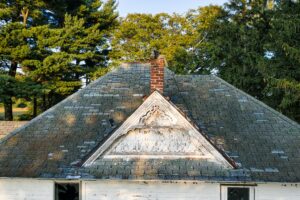
High humidity means moisture lingers on surfaces instead of evaporating. When hot, damp air finds its way into your roofing structure, it settles on the wooden structural components beneath your shingles.
-
The Decking Danger: Your roof’s plywood decking (the wooden boards under your shingles) is highly susceptible to moisture absorption. When humidity keeps this wood constantly damp, it triggers wood rot.
-
The Structural Threat: Over time, rotting wood softens and warps. This causes your shingles to lose their grip, leads to localized sagging, and can eventually cause a catastrophic structural failure.
-
The Attic Mold Outbreak: If that humid air stays trapped, it creates a greenhouse effect in your attic. This is the perfect breeding ground for toxic mold and mildew, which eat away at your drywall and compromise the air quality inside your living space.
2. Those Ugly Black Streaks: Meet Gloeocapsa Magma
If you’ve looked up at your roof—or your neighbors’ roofs—and noticed long, unsightly dark streaks, you aren’t looking at dirt or soot. You are looking at a living organism called Gloeocapsa magma, a type of blue-green algae.
Algae thrives on heat, moisture, and shade. Because Maryland summers check all three boxes, these spores land on your roof and spread rapidly.
While the streaks look awful and hurt your home’s curb appeal, the damage goes deeper than aesthetics. This specific algae feeds on the calcium carbonate limestone filler used in modern asphalt shingles. As it eats away at the filler, it loosens the protective ceramic granules on your shingles. Once those granules wash away, your shingles lose their UV defense, dry out, crack, and fail prematurely.
Pro Tip: Never use a standard pressure washer to clean these streaks. High-pressure water will strip away the remaining granules, ruining your roof instantly. Instead, look for professional, low-pressure chemical treatments, or ask your roofing contractor about upgrading to copper-infused, algae-resistant (AR) shingles during your next replacement.
3. The Ultimate Defense: Proper Attic Ventilation
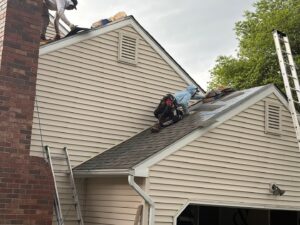
So, how do you fight back against an invisible force like humidity? The answer lies entirely in your attic ventilation system.
A properly balanced attic ventilation system relies on a continuous, natural flow of air. It uses intake vents (typically located under your soffits/eaves) to pull cool air in, and exhaust vents (like ridge vents along the peak of your roof) to push hot, humid air out.
Without this continuous airflow, your attic becomes a trap. On a 90°F Maryland summer day, an unventilated attic can easily reach temperatures exceeding 140°F. When you mix that extreme heat with trapped humidity, the moisture condenses on the underside of your roof deck, rotting the wood from the inside out and literally “baking” your shingles from beneath.
Protect Your Home This Summer
Your roof is a complex, engineered ecosystem designed to protect your home. If you want it to survive decades of heavy Maryland humidity, you cannot afford to ignore what’s happening underneath the shingles.
Whether you are looking for trusted roofers in Annapolis to inspect coastal moisture wear, or you need a local expert right here in Columbia to assess your attic’s airflow, keeping your ventilation balanced is the best way to extend your roof’s lifespan.
Think your attic might be trapping summer humidity? Contact Columbia Roofing to get your Roofle FREE Instant Online Quote now! For up-to-date information, follow us on Instagram and Facebook!