Roof Repair vs. Replacement: How Maryland Homeowners Can Decide
When water begins dripping into your attic after a heavy central Maryland rainstorm—or after you spot curling shingles from your driveway—a single question quickly takes center stage: Roof Repair vs. Replacement: Which Howard County roofing companies are the best to call?
Making the wrong call can be costly. Repairing a roof that has surpassed its functional lifespan often leads to a cycle of recurring leaks and cumulative labor bills. Conversely, replacing a roof that only suffered minor, localized storm damage can burn through home improvement budgets unnecessarily.
When evaluating options, top Howard County roofing companies look closely at three main factors: roof age, the percentage of damaged surface area, and long-term cost comparisons. Here is a clear guide to help you make an informed decision for your Maryland home.
1. The 30–50% Surface Area Rule
The total percentage of affected roofing material is one of the clearest indicators of whether a repair will hold up over time.
-
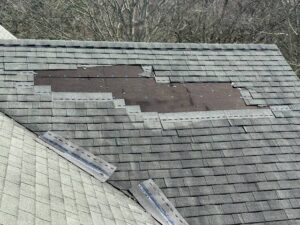
Under 20% Damaged Area (Spot Repair Candidate): If a recent windstorm lifted a few shingles on a single slope or an isolated pipe boot collar cracked, a targeted repair is usually the most practical and economical fix.
-
30% to 50% Damaged Area (Grey Zone): When damage spans multiple slopes or affects nearly half the roof surface, spot repairs become risky. Patching large sections leaves seams between old and new materials, resulting in uneven wear and potential leak points along the boundaries.
-
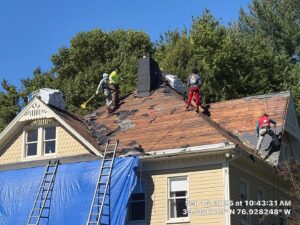
Over 50% Damaged Area (Full Replacement Candidate): When half or more of your roof exhibits granule loss, missing shingles, soft decking, or widespread cracking, spot repairs are merely temporary band-aids. At this stage, full replacement protects the structural integrity of your home.
2. Evaluating Roof Age Against Maryland’s Climate
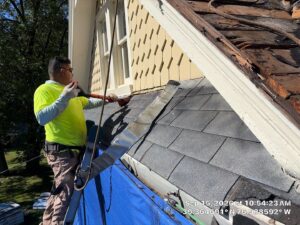
Maryland’s weather tests residential roofing systems year-round. From humid summer days and severe thunderstorm winds to winter freeze-thaw cycles and ice dams, local weather accelerates wear on aging materials.
How your roof holds up depends heavily on its age and material type:
| Roofing Material | Typical Maryland Lifespan | When to Repair | When to Replace |
| Standard 3-Tab Asphalt | 15 – 20 Years | Under 10 years old with minor isolated damage | 15+ years old or showing widespread granule loss |
| Architectural Shingles | 22 – 30 Years | Under 15 years old with minor localized damage | 20+ years old or experiencing multiple active leaks |
| Metal Roofing | 40 – 70 Years | Loose fasteners, isolated seam failures, or minor rust spots | Structural deck rot or widespread panel degradation |
The Age Decision Matrix
-
Under 10 Years Old: Favor targeted repairs unless severe structural decking damage or major storm destruction has occurred.
-
10 to 15 Years Old: Patch if the damage is confined to a single area. If leaks appear in two or more distinct rooms, schedule a comprehensive professional evaluation.
-
18+ Years Old: Full system replacement is almost always the more cost-effective choice. Investing money into an asphalt roof near the end of its design life rarely yields a good return on investment.
3. Financial Breakdown: Patching vs. Full System Replacement
While a spot repair has a lower upfront cost, cumulative repairs on an old roof often exceed the cost-per-year value of a new system.
Option A: The Short-Term Repair Path
-
Upfront Investment: Lower initial cash outlay.
-
Best Used For: Young roofs with minor storm damage or sudden localized leaks.
-
Hidden Costs: Mismatched shingle colors (due to UV fading of existing shingles), no new manufacturer warranty coverage, and the potential for unaddressed underlying rot to spread into roof decking and interior drywall.
Option B: The Full Replacement Path
-
Upfront Investment: Higher initial capital commitment.
-
Best Used For: Aging roofs, widespread storm damage, or homes undergoing major exterior renovations.
-
Long-Term Benefits: Includes full tear-off to inspect and replace damaged plywood decking, installation of modern ice-and-water shield barriers along eaves and valleys, brand-new manufacturer warranties (often up to 50 years non-prorated), and improved home resale appeal.
4. Energy Efficiency & Insurance Considerations
When weighing your options, keep these two key financial factors in mind:
-
Attic Ventilation & Cooling Bills: Central Maryland summers place heavy demands on HVAC systems. Replacing an old roof allows Howard County roofing companies to upgrade ridge vents and soffit intake systems, lowering attic temperatures and reducing monthly energy costs.
-
Insurance Premiums & Coverage: Many home insurance providers offer premium discounts for new, high-wind-rated architectural shingles. Conversely, carrying an aging roof past its recommended lifespan can complicate storm damage claims if an insurer attributes water intrusion to delayed maintenance rather than storm action.
Next Steps for Maryland Homeowners
If you aren’t sure where your roof falls on the spectrum, start with a professional, hands-on roof inspection Contact Columbia Roofing to schedule a thorough roof evaluation and ensure your home stays protected through every season. We also offer FREE estimates through Roofle on our homepage. For up-to-date information, follow us on Instagram and Facebook!