The Maryland Humidity Hangover: Dealing with Black Streaks and Algae on Your Shingles”
As the Maryland summer winds down, homeowners in Columbia are finally getting a break from the oppressive July and August humidity. But while we might be looking forward to cooler autumn breezes, our roofs are left dealing with a serious “humidity hangover.”
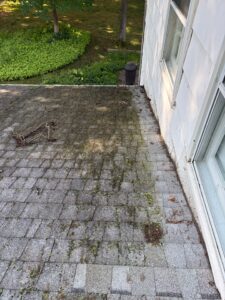
If you look up at your home and notice ugly, dark, soot-like streaks running down your shingles, you aren’t looking at dirt, soot, or mold. You are looking at a living organism that has been throwing a party on your roof all summer.
Here is what is actually happening up there, why it matters, and why taking a DIY approach to clean it can ruin your home.
What is That Black Stuff on My Roof?
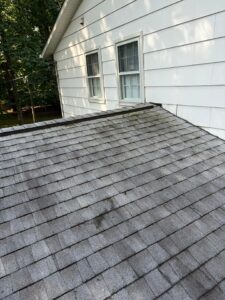
Those dark stains and streaks are actually colonies of a hearty, ancient cyanobacteria called Gloeocapsa magma. Often mistakenly called “black roof algae”, this airborne bacterium loves warm, damp, and shaded environments. In Columbia, it almost always starts on the north-facing slopes of your roof or under heavy tree canopies where moisture takes longer to evaporate.
As the bacteria colony grows, it develops a dark, UV-protective pigment. Gravity eventually pulls these expanding colonies down the slope of your roof, creating those characteristic vertical black streaks.
How It Quietly Kills Your Shingles
While those streaks are definitely an eyesore that hurts your curb appeal, the damage is more than skin-deep. Gloeocapsa magma is actually actively degrading your roofing system in two major ways:
-
It Eats Your Shingles: Modern asphalt shingles are made with limestone filler to add weight and durability. Gloeocapsa magma feeds on limestone. As it slowly digests the limestone, the protective ceramic granules on your shingles begin to loosen and wash away, drastically shortening your roof’s overall lifespan.
-
It bakes your house: Your roof is designed to reflect sunlight. However, those dark, algae-ridden streaks absorb heat like a sponge. This elevates your attic temperature and forces your air conditioning to work overtime, spiking your summer utility bills.
Why DIY Pressure Washing is a Terrible Idea
When homeowners spot these ugly streaks, their first instinct is often to rent a pressure washer over the weekend or hire a cheap power-washing amateur. Do not do this.
An asphalt shingle roof is incredibly tough against falling rain, but it is highly vulnerable to pressurized, directed upward streams of water.
-
Granule Blast-Off: High pressure will immediately strip the remaining protective granules off your shingles, aging your roof by a decade in just a few minutes.
-
Water Intrusion: Pressure washers can easily force water under the shingles, soaking your underlayment, rotting your wooden roof deck, and starting a mold infestation in your attic.
-
Voided Warranties: Most major shingle manufacturers explicitly state that using a pressure washer voids your roof’s warranty.
To safely eliminate Gloeocapsa magma, professionals use a method called soft washing. This involves applying a specialized, low-pressure biodegradable solution that sanitizes and kills the bacteria at the root without damaging the fragile shingle surface.
Protect Your Investment
Your roof is your home’s shield. If you want to safely restore its beauty and extend its lifespan, look for professional, manufacturer-approved care. Instead of taking a risky DIY approach, search for the best roofing companies near me to find licensed, local Mid-Atlantic professionals who specialize in soft-wash treatments and comprehensive seasonal roof inspections.
Contact Columbia Roofing to get your Roofle FREE Instant Online Quote now! For up-to-date information, follow us on Instagram and Facebook!