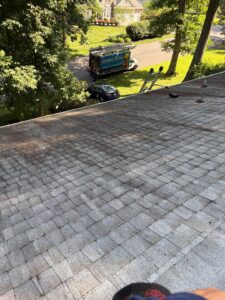
Nor’easters vs. Your Roof: How Laurel Maryland Storms Cause Hidden Leaks
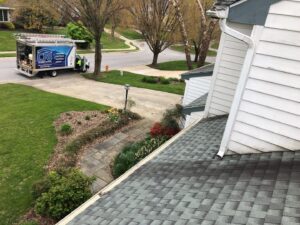
As your Laurel Roofing Company, we frequently inspect homes after major weather events only to find water working its way through hidden entry points. Learning how these storms target your roof—and where to look afterward—can save you thousands in structural repairs.
When a Nor’easter blows through Central Maryland, it brings a punishing mix of high-velocity wind, relentless downpours, and rapid temperature swings. While major storm damage like a fallen tree branch is obvious, coastal storms often inflict far subtle injuries on your home. Heavy wind-driven rain can compromise your home’s exterior without leaving a single shingle in your yard.
How Wind-Driven Rain Forces Water Uphill
Standard rainfall drops vertically, allowing shingles, underlayment, and gutters to shed water using gravity. Nor’easters, however, create prolonged wind gusts that drive rainfall sideways—and sometimes upward.
When rain blows horizontally across your roofline, it forces water under the overlapping edges of asphalt shingles. Once water gets past the outer shingle layer, it saturates the underlayment and seeps into the wooden roof deck below. This hidden moisture often travels along roof rafters before dripping onto your ceiling, making the interior leak appear feet away from the actual source of the damage.
The Hidden Weak Point: Lifted Flashing
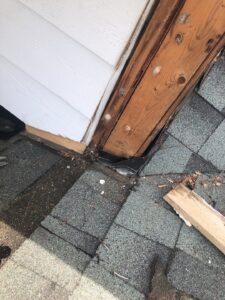
Flashing—the thin metal strips installed around chimneys, skylights, vent pipes, and wall intersections—is your roof’s primary defense against water intrusion. Unfortunately, it is also highly susceptible to Nor’easter winds.
-
Prying Action: Strong winds catch the edges of metal flashing, breaking the seal created by roofing cement or fasteners.
-
Micro-Gaps: Even if the flashing doesn’t tear completely away, wind creates tiny gaps between the metal and your roofing material.
-
Driven Moisture: Wind-driven rain hits these newly exposed gaps, bypassing your roof’s protective layers entirely and channeling water straight into wall cavities and attic insulation.
Because lifted flashing often settles back down after the wind dies down, it looks completely normal from the ground while actively letting water inside every time it rains.
Your Post-Nor’easter Inspection Checklist
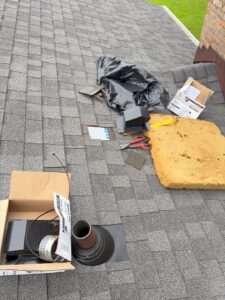
After a severe storm passes over Laurel, perform a initial safety-first inspection. Never walk on a wet or potentially damaged roof. Start with a ground-level exterior sweep and an internal attic check using this checklist:
-
Attic Inspection (Interior)
-
Check attic insulation for damp spots or clumping.
-
Look at the underside of the roof decking for dark water staining or active drips.
-
Inspect the interior perimeter where the roof meets the exterior walls.
-
-
Ground-Level Exterior Walkaround
-
Scan the roofline with binoculars for raised, cracked, or missing shingles.
-
Check for misaligned metal flashing around chimneys, dormers, and vent pipes.
-
Look for loose or overflowing gutters, which can indicate blocked downspouts or fascia damage.
-
Check ground-level downspout exits for excess shingle granules washed away by heavy rain.
-
Protecting Your Laurel Home Before the Next Storm
Catching storm damage early is the difference between a simple flashing repair and a full structural remediation. If you suspect wind-driven rain breached your roof during the last storm, having a local professional perform a thorough attic and roof inspection ensures small gaps are sealed before the next weather system moves in.
Hurricane season is upon us and it’s never too early to protect your home. Contact Columbia Roofing to get your Roofle FREE Instant Online Quote now! For up-to-date information, follow us on Instagram and Facebook!